


How We Work
A working system in 4 weeks is better than a perfectly planned project that never finishes.
Many CRM projects fail not because of technology, but because of approach. Too much at once, too little practical focus, too long until the first result. We do it differently. Our philosophy is based on years of experience with successful and failed projects. We’ve learned what works – and what doesn’t.
The MVP Approach – Start Fast, Improve Continuously
MVP stands for "Minimum Viable Product" – the smallest functional product. In the CRM world, this means: We start with the essentials and build from there. The traditional approach looks like this: Months of requirements analysis, detailed specifications, elaborate implementation, big-bang launch. Sounds professional – but often doesn't work. The problem: The longer the planning phase, the more changes in the meantime. By the time the system goes live, the requirements no longer fit.
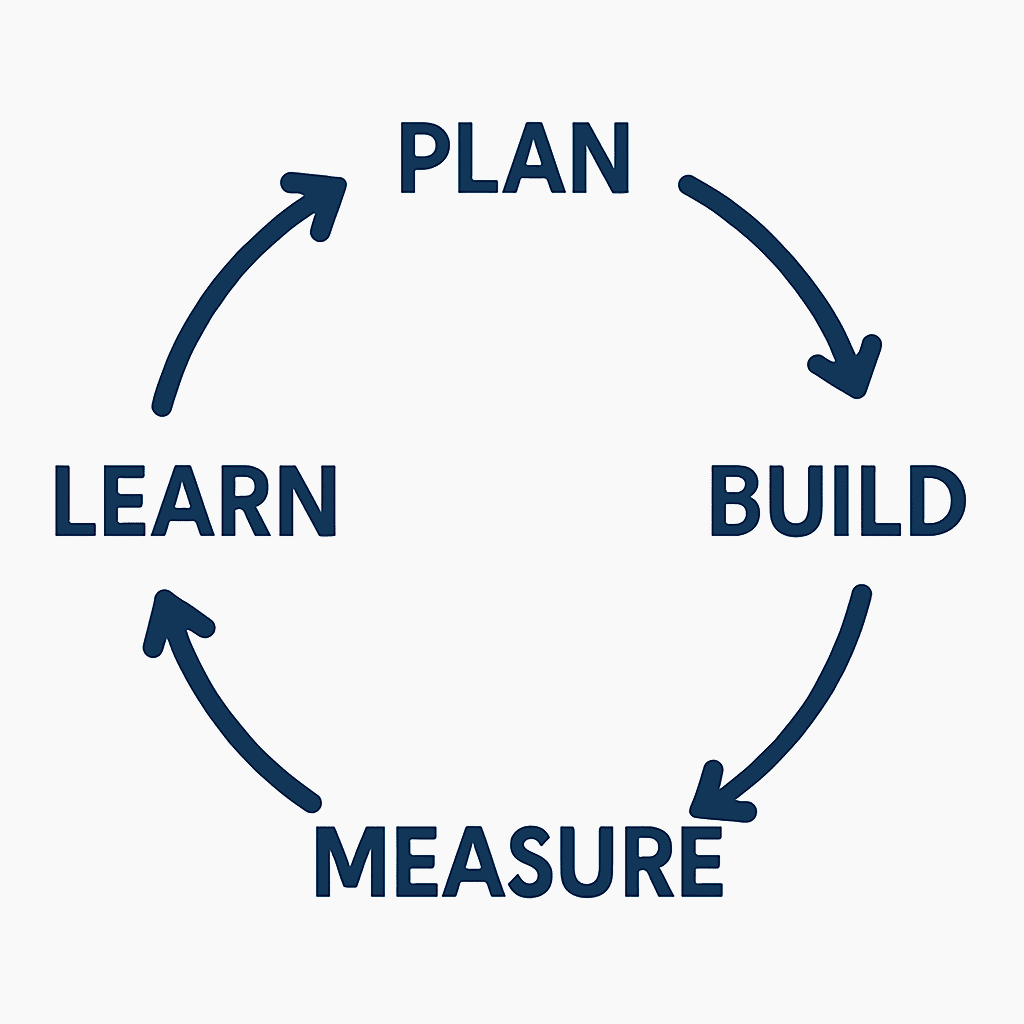
Our Approach: Go Live Fast, Then Optimize
Identify Core Process
What's the most important thing that needs to work? We do that first. Not everything, just the essentials.
Go Live Fast
Typically after 4-6 weeks. A usable system that delivers real value – even if not everything is perfect yet.
Gather Real Feedback
Your users work with the system. They learn what works and what's missing. That's more valuable than any theory.
Improve Iteratively
Based on real experience, we optimize. Feature by feature, process by process. The system grows with your requirements.
MVP vs. Traditional Approach
| Feature | Aspect | MVP Approach Empfohlen | Traditional Approach |
|---|---|---|---|
| Time to Live | ✓ | 4-6 weeks | 3-6 months |
| Initial Scope | ✓ | Core functions | Complete system |
| Feedback | ✓ | Early and continuous | Only after launch |
| Risk | ✓ | Low (quick correction) | High (late discovery) |
Our Principles
Results Over Perfection
An 80%-working system that's actually used is better than a 100%-perfect system sitting in a drawer.
Listening Over Talking
We don't come with ready solutions. We ask questions, listen, and understand your situation before giving recommendations.
Transparency Over Surprises
You always know where we stand: What's done, what's next, what it costs. No hidden fees.
Partnership Over Project Business
We think long-term. A CRM project doesn't end at go-live – it's the beginning of a journey.
Pragmatism Over Dogma
Best practices are good – but not every best practice fits every company. We adapt our approach to your reality.
Enablement Over Dependency
Our goal is for you to master your CRM yourself. We train, document, and transfer know-how.
Our Consulting Process – Step by Step
Every project is different, but our proven process provides structure and security.
Initial Consultation (free, 30 min)
In the free initial consultation, we get to know each other. You tell us about your situation, challenges, and goals. Via video call, no obligation.
Potential Analysis ($499, 35 min + report)
Structured assessment of your current processes, systems, and challenges. Written report with concrete recommendations. Fully credited toward engagement.
Quote & Project Planning
Detailed project plan with milestones. Transparent cost breakdown (fixed price or time & materials). Clear definition of scope and responsibilities.
Implementation (MVP approach)
Weekly status updates, regular demos and feedback loops. Documentation of all configurations. Typical duration: 4-8 weeks for MVP.
Training & Go-Live
Role-based training (admin, user, manager). Hands-on exercises with real data. Documentation and quick-reference guides. Supported go-live.
Phase 6: Optimization & Support (optional, ongoing)
After go-live, the real journey begins. We stay by your side – for optimizations, new features, troubleshooting, and strategic development.
- Monthly support packages from $1,000/month
- Regular review calls
- Priority support for issues
- Continuous optimization based on usage data
How We Communicate
Clear Standards for Good Communication
- Weekly status updates: Short written report – what was done, what’s next, are there blockers?
- Regular video calls: Weekly or bi-weekly depending on project phase
- Fast responses: We answer emails within 24 hours
- Shared documentation: All decisions are documented and shared with you
International Collaboration
From our location in Spain, we work with companies across Europe, North America, and beyond. Remote collaboration is our everyday.
- Timezones: We’re flexible. Meetings with DACH clients? No problem. Calls with US West Coast? We do that too.
- Languages: All communication in your language: English, German, or Spanish – fluent and without interpreters.
- On-site appointments: Most work happens remotely. But for important milestones, we’re happy to come to you: Kickoff workshops, go-live support, strategic planning meetings.
Does This Approach Sound Like a Fit?
Find out in a non-binding conversation how we could work together.